

A Brief Guide to Tea – Tea Varieties and Processing Explained
Tea is much more than just a drink. For thousands of years, it has accompanied people in everyday life, culture, and enjoyment, and, alongside water, it is one of the most consumed beverages in the world. This brief guide to tea provides an initial overview of its history, the tea plant, its processing, and the vast variety of tea and tea-like infusions.
From Camellia sinensis, green and black tea, to herbal, fruit, rooibos, honeybush, and mate tea: here you will find a compact introduction to the world of tea.
History
For 5,000 years, tea has been the most consumed beverage worldwide after water, looking back on an unparalleled history. Since the legend in which the Chinese Emperor Shen Nong enjoyed the first cup of tea, created by chance, new ways of processing the leaves of the original plants, Camellia sinensis or Camellia assamica, have continued to fascinate.
Green tea, black tea, white tea, yellow tea, and oolong tea all fundamentally come from the same tea plant. The differences arise primarily through processing, fermentation, and leaf treatment.
Camellia sinensis
The most well-known results of Camellia sinensis "leaf art" are the most diverse types of black and green teas. Or in other words: green and black tea, just like white, yellow, and oolong tea, all originate from the same plant.
In the meantime, numerous hybrids have been created through breeding, adapted to different climatic and regional conditions. The differences in color and taste of the finished tea are essentially the result of how the leaves are processed.
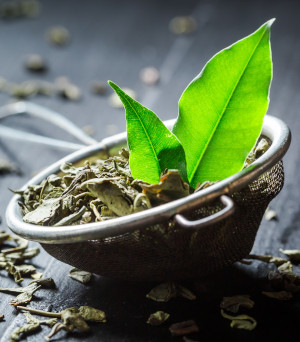
Tea leaves – the foundation for green, black, white, yellow, and oolong tea
Processing
First, immediately after picking, the leaves are withered in tunnels or outdoors to make them supple for further processing.
In the production of green tea, every effort is made to prevent fermentation by briefly heating, roasting, or steaming the leaves. Black tea, on the other hand, gains its characteristics precisely through this fermentation, which occurs at the cell walls broken by the rolling of the leaf and the cell sap released there.
In fermentation rooms, the tea is spread out and gradually turns copper-red in reaction to the air. The subsequent drying process turns the moist, copper-red leaves into finished black tea. Green tea, by contrast, changes only minimally.
Finally, the resulting raw tea is sifted into different grades according to leaf size. Dust and fannings are the smallest particles, which are used for inexpensive tea bags. The larger and largely unbroken leaf grades form the group of premium teas, such as those you will find in our editions.
Picking, withering, rolling, fermenting or heating, drying, and sorting require a great deal of experience, meticulous work, and the know-how of tea garden managers and teamakers.
Creative Variety
"Infusions" have also been popular forever – that is, brews made from herbs and fruits, often called "herbal tea" or "fruit tea." The history of infusions made from plant parts such as roots, flowers, or leaves is no less fascinating.
Medieval monastic medicine already knew many herbs that, when infused with water, were able to alleviate various ailments. Even today, herbs remain an indispensable part of home remedies.
This interesting sector often feels unfairly treated, as it has so much more to offer than the characterless "hospital tea" it is often wrongly accused of being. Take mint alone: there are dozens of varieties, from which we have selected the most aromatic for you. While Nana mint is distinctly strong and Moroccan in style, apple mint refreshes with a fruity zest.
Regarding creative variety, fruit tea also has much to offer: surrounding the base of traditional ingredients like hibiscus and rosehip are the most wonderful blends featuring berries, orchard fruits, citrus, coconut, or even gummy bears and lemongrass.
Not to be forgotten are the traditional infusions from South Africa – rooibos tea and honeybush tea – or the "green gold of the Indians," mate tea from Brazil.
For those who truly want to discover everything, we offer one piece of advice: have the courage to try something new – explore the range, and you will always be rewarded with new discoveries.
Further Tea Knowledge
Discover further information on origin, quality, cup color, and proper preparation.


Welcher Tee passt zu Ihrem Moment?
Ein guter Tag beginnt mit einer Tasse Tee. Oder einer kleinen Pause. Finden Sie in sechs kurzen Fragen den Tee für Ihren persönlichen Genussmoment.
4.6-star Google rating of the
Schönbichler Tea Merchants
What our customers say about our quality
Useful information about tea, its origin, preparation, and special moments of enjoyment.
Tea Knowledge & Viennese Culinary Culture
Discover the diverse world of tea: from traditional growing regions and select tea varieties to proper preparation and current recommendations from our Viennese tea shop. In our blog, we share expertise, stories, and inspiration for even more enjoyment in every cup.

The Morrison Legacy: Aberargie – A "Barley-to-Bottle" Milestone Comes to Wollzeile
Starting March 3, 2026, Aberargie, an exciting new single malt from the Morrison family, will be arriving on Wollzeile. The first release combines authentic barley-to-bottle craftsmanship with frui...

Wagemut – Spirits with Character
WAGEMUT PX CASK - the instrument of purification... for all those who previously thought rum was not for them at all. The fact that the ranks of devotees of the rich sugarcane juice are growing ste...

Calvados - Regional products with a global reputation
Calvados, the world-famous "apple brandy" from Normandy, has enjoyed an excellent reputation for decades as one of the best fruit brandies in the world. The consistently high product quality is par...
